
Beyond the click: Implementing the Universal Commerce Protocol (UCP)
For two decades, the goal of e-commerce SEO was simple: rank, click, and convert on-site. But with the rollout of the Universal Commerce Protocol (UCP) in early 2026, Google is fundamentally changing the “click” part of that equation.
We are entering the era of Agentic Commerce, where the transaction happens directly within the AI interface. Whether that’s Gemini or the new Search “AI Mode”—bypassing the traditional web store UI entirely.
What is the Universal Commerce Protocol?
The Universal Commerce Protocol is an open-source standard designed to be a “shared language” between AI agents and e-commerce backends. It moves beyond structured data for display (like Schema.org) and introduces structured data for action.
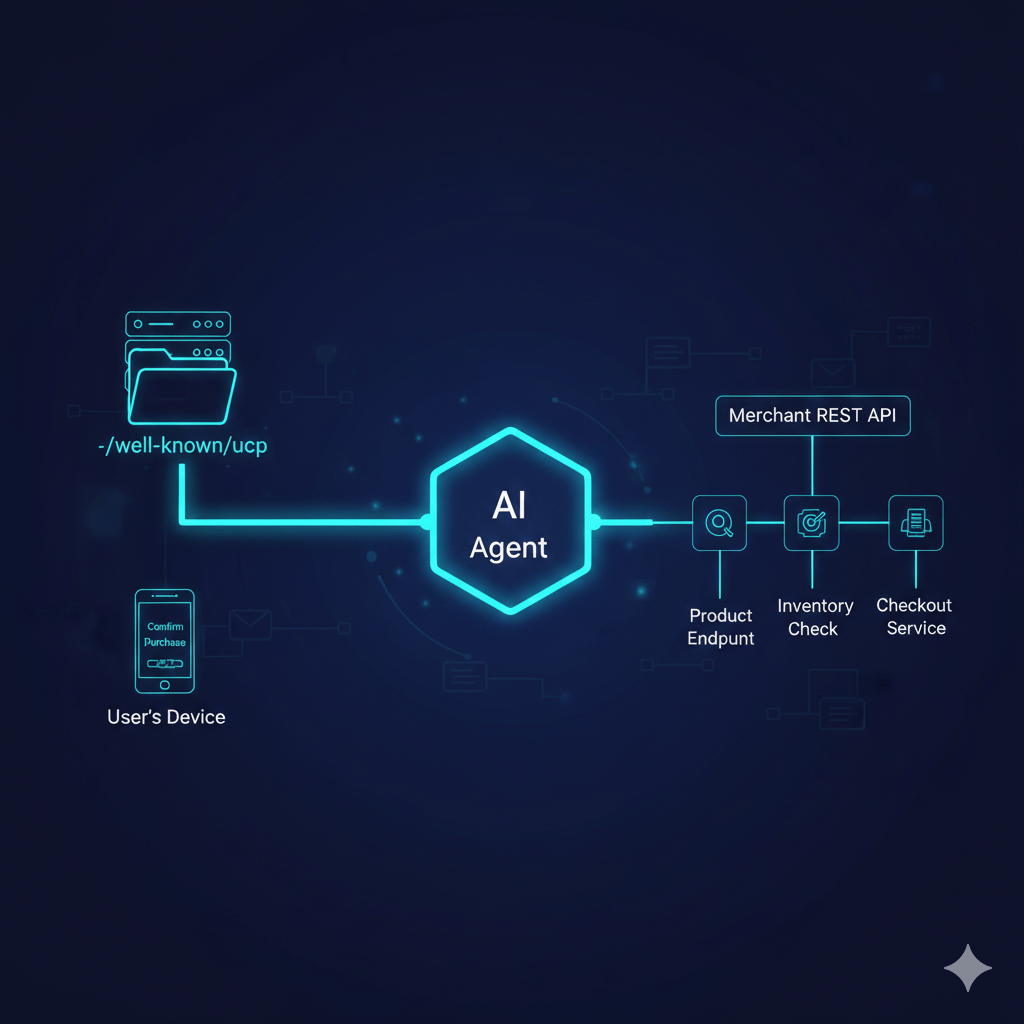
Unlike the bespoke integrations of the past, UCP provides a modular framework for:
- Discovery: Helping agents identify product capabilities and real-time inventory.
- Negotiation: Handling dynamic pricing, loyalty discounts, and tax calculations.
- Transaction: Executing the final checkout via standardized payment handlers like Google Pay.
The technical foundation: UCP manifest /.well-known/ucp
For those of us building custom themes or managing technical SEO on a deeper level, the most critical part of this rollout is the UCP Manifest. This is a machine-readable JSON file that must be hosted at your domain’s root to signal “Agentic Readiness.”
A basic UCP manifest looks like this:
{
  "ucpVersion": "1.0.0",
  "merchantName": "Your Brand Name",
  "capabilities": ["dev.ucp.shopping.checkout", "dev.ucp.inventory.realtime"],
  "services": {
    "checkoutUrl": "https://api.yourdomain.com/ucp/v1/checkout",
    "statusUrl": "https://api.yourdomain.com/ucp/v1/order-status"
  },
  "paymentHandlers": [
    {
      "type": "googlePay",
      "merchantId": "YOUR_MERCHANT_ID"
    }
  ],
  "signing_keys": [
    { "kty": "RSA", "n": "...", "e": "AQAB", "kid": "key-1" }
  ]
}
Feel free to use the above code snippet to create your own.
You can have multiple paymentHandlers
{
    "type": "shopPay",
    "merchantId": "YOUR_SHOP_PAY_ID"
}
The Universal Commerce Protocol (UCP) is designed to be extensible, allowing you to advertise all the payment methods your backend can process so an AI agent can negotiate the best one for the user.
How to add multiple handlers
The paymentHandlers field is an array of objects. Each object must follow the specific schema for that provider. For example, if you want to support both Google Pay and another provider like PayPal or Shop Pay, your JSON would look like this:
"paymentHandlers": [
  {
    "type": "googlePay",
    "merchantId": "YOUR_GOOGLE_MERCHANT_ID",
    "allowedCardNetworks": ["VISA", "MASTERCARD"],
    "gateway": "your_gateway_name",
    "gatewayMerchantId": "your_psp_id"
  },
  {
    "type": "shopPay",
    "merchantId": "YOUR_SHOP_PAY_ID"
  }
]
By publishing this file, you are essentially giving AI agents a “business card” that tells them exactly how to interact with your server to complete a sale.
Key Technical Rules:
- Negotiation: When a checkout starts, the AI agent (like Google Gemini) compares the manifest to the user’s saved wallets. The agent chooses the most “frictionless” option that matches both lists.
- Provider Specs: Each handler type (e.g.,
googlePay) has its own required fields. Specific requirements for Google’s handler are in the Google Pay Payment Handler Specification. - Placement: Host the JSON at your domain’s
/.well-known/ucppath for agent discovery.
Why this matters for custom devs
If you’ve spent years optimizing a lightweight, high-performance theme (like my SimplePro WP theme that you are reading on right now), you are already ahead. The Universal Commerce Protocol rewards speed and data hygiene.
Google’s AI agents are sensitive to latency; if your UCP endpoints take too long to respond with shipping rates or inventory status, the agent will simply “pivot” to a competitor who responds faster. This makes INP (Interaction to Next Paint) and server-side response times more critical for revenue than they ever were for organic rankings.
Merchant Center: The new feed strategy
To participate in UCP-driven commerce, your Google Merchant Center feed needs an update. Google has introduced the native_commerce attribute.
- native_commerce [boolean]: Setting this to
truesignals that the product is eligible for AI-driven, in-interface checkout. - conversational_attributes: You should now populate fields that answer natural language questions (e.g.,
is_waterproof,care_instructions,noise_level).
Conclusion: The future for sure is protocol-driven
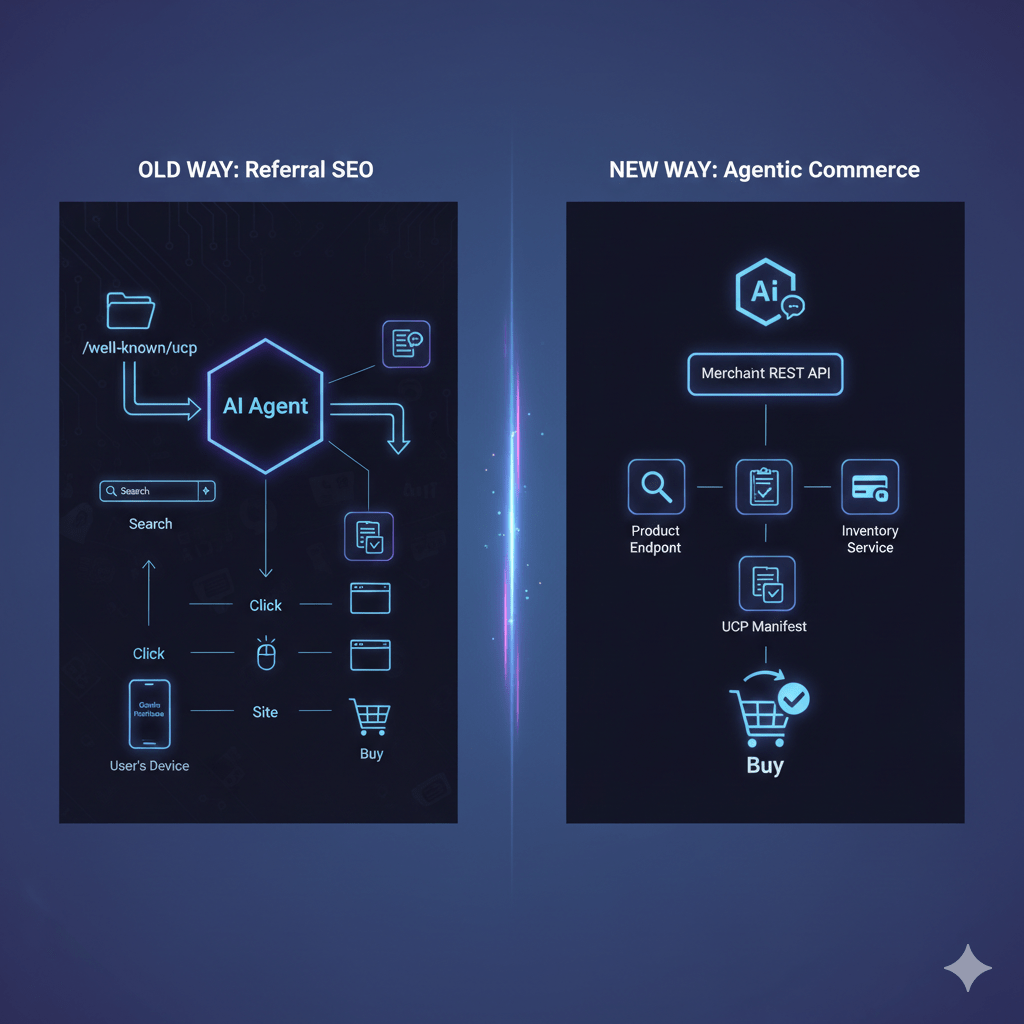
The Universal Commerce Protocol is not just another Google feature; it’s a shift from “referral SEO” to “infrastructure SEO.” As we build and maintain our own tools like Crawlercheck, our focus must shift at some point from just analyzing how a bot crawls a page to how an agent executes a purchase.
The web is becoming a series of protocols. If your store doesn’t speak the language, it will eventually become invisible to the fastest-growing segment of shoppers: those who let their AI do the buying.
A more detailed description of UCP is available on the Google Developers Blog here: https://developers.googleblog.com/under-the-hood-universal-commerce-protocol-ucp/
Make sure to check out my newest articles about The February 2026 Google Updates: Transitioning to Agentic Commerce. and follow the google update and technical SEO for more UCP topics. I will be posting more and more about UCP, whenever I get some news and try new things about it. I am planning to also share some measurement reports in the future.